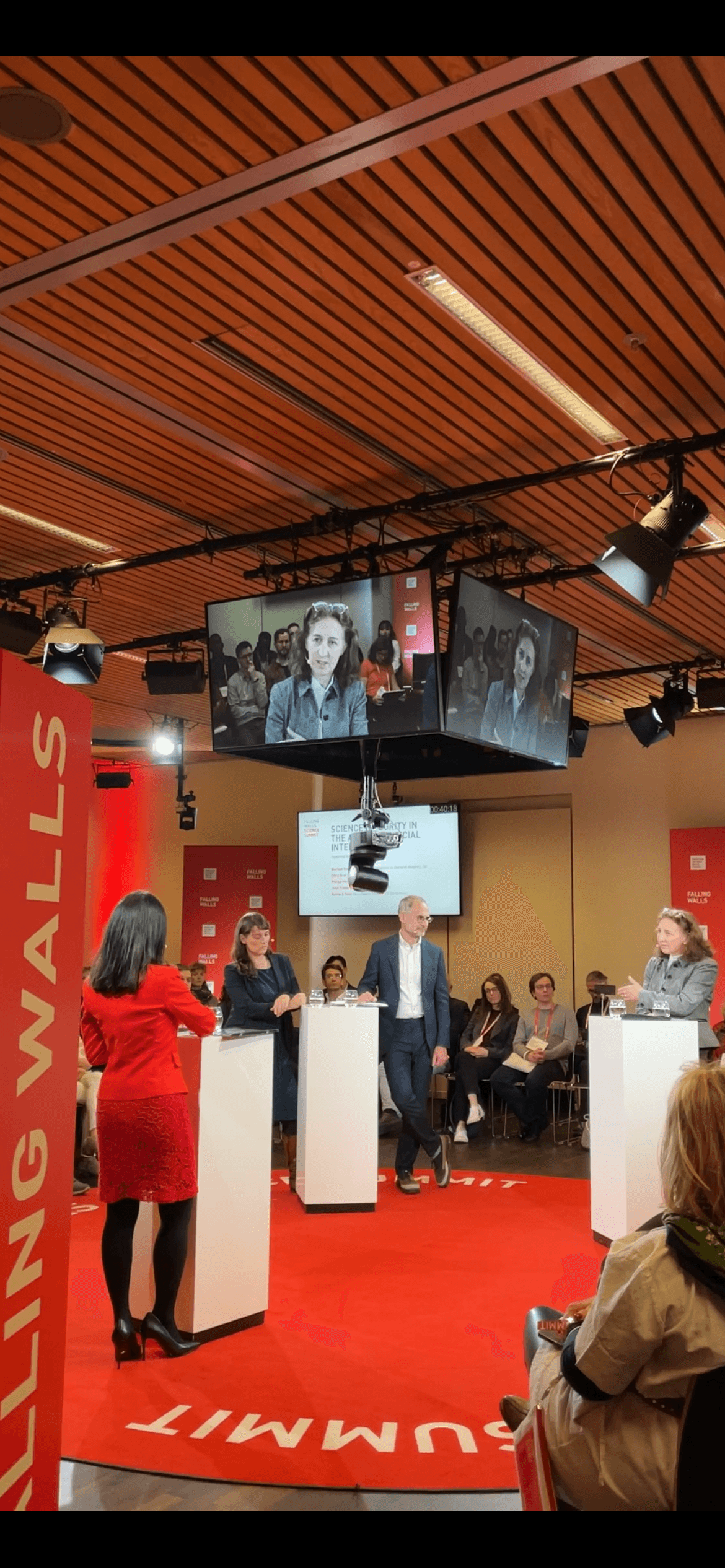
Moving emerging technology from research into society requires more than technical capability. It means translating experimental systems into applications that can operate under real-world constraints, remain understandable to the people interacting with them and create value beyond the prototype.
Applied AI in real-world contexts
A central focus for me was how artificial intelligence moves from experimental research into environments where reliability, accountability and human impact matter.
Applied AI systems need to work beyond controlled demonstrations. Their behaviour, limitations and role within a wider process must remain understandable, particularly when they are introduced into public-facing or socially sensitive contexts.
These questions closely connect to my work on AI systems, human-AI interaction and responsible deployment.
From research to deployment
Research prototypes can demonstrate what a technology is capable of. Real-world deployment introduces a different set of questions.
How does a system respond to unexpected situations? How should its performance be evaluated outside the lab? Where are human oversight and intervention necessary? And how can increasingly complex capabilities remain transparent and controllable?
This transition from research to working systems is a recurring part of my own practice.
Connecting design, engineering and research
Emerging technologies rarely fit neatly within a single discipline.
Turning research into meaningful applications requires design, engineering and research to inform one another. Technical possibilities influence interaction design, while observations from users and real-world contexts often reveal questions that cannot be answered through technical development alone.
My work frequently moves between these areas, using research to inform concepts and working prototypes to test how new technologies behave in practice.
Technology in public and societal contexts
The summit also created space for broader questions around the role of science and technology within institutions and society.
For me, responsible innovation is not only about identifying meaningful applications for new technologies. It also involves considering accessibility, governance, accountability and the consequences that emerge once a system leaves a controlled research environment.
These questions become particularly important when AI interacts with social, cultural or institutional structures.
Interdisciplinary exchange
Falling Walls brought together researchers, institutions and innovators approaching technological change from very different perspectives.
For me, this interdisciplinary exchange was particularly valuable for understanding how similar questions around AI, emerging technology and societal impact are being approached across research fields, and where design can help translate those developments into tangible experiences and systems.

Let’s keep in touch.
Discover more about our projects, pilots and interactive design. Follow us on LinkedIn and Instagram.